CHALLENGE

The defect is obvious to the operator and impossible to describe to a machine.

Scratches, dents, pits, soil, paint runs, texture changes: the operator knows one when they see one and cannot say what size, where or how dark. Rule-based vision has been tried and threw out good parts, or let the bad ones through, so the line went back to people.

How it shows up on the line

Operators disagreeThe same part is accepted on one shift and rejected on the next, because the rule lives in people.
False rejects from the last systemA threshold set tight enough to catch the defect also catches reflections and part-to-part variation.
Shiny and curvedMachined, painted, plated or moulded surfaces reflect the light and hide the mark in the glare.
New defect typesA supplier change brings a defect the inspection has never seen.

Why it is still there

The usual fixes have usually been tried.

ThresholdsA fixed rule for brightness or edge length describes one defect on one surface under one light.
One lightA single lamp shows some defects and hides others; the lighting has to be chosen for the surface.
No feedbackAn inspection that cannot be corrected from the floor drifts away from what quality means.

How DESSAR removes it

Collect the partsGood parts and every defect class you reject, with the rate of each.
Choose the lightingDome, dark-field, coaxial or multi-angle, so the defect shows and the surface does not.
Learn from your partsThe inspection is trained on your good and rejected parts and tuned to your reject rate.
Correct it from the floorBorderline parts are reviewed and fed back, so the inspection improves without a programmer.

The system that removes it

Built as a product, fitted to your part and your line. Open it to run the demo and take the datasheet.
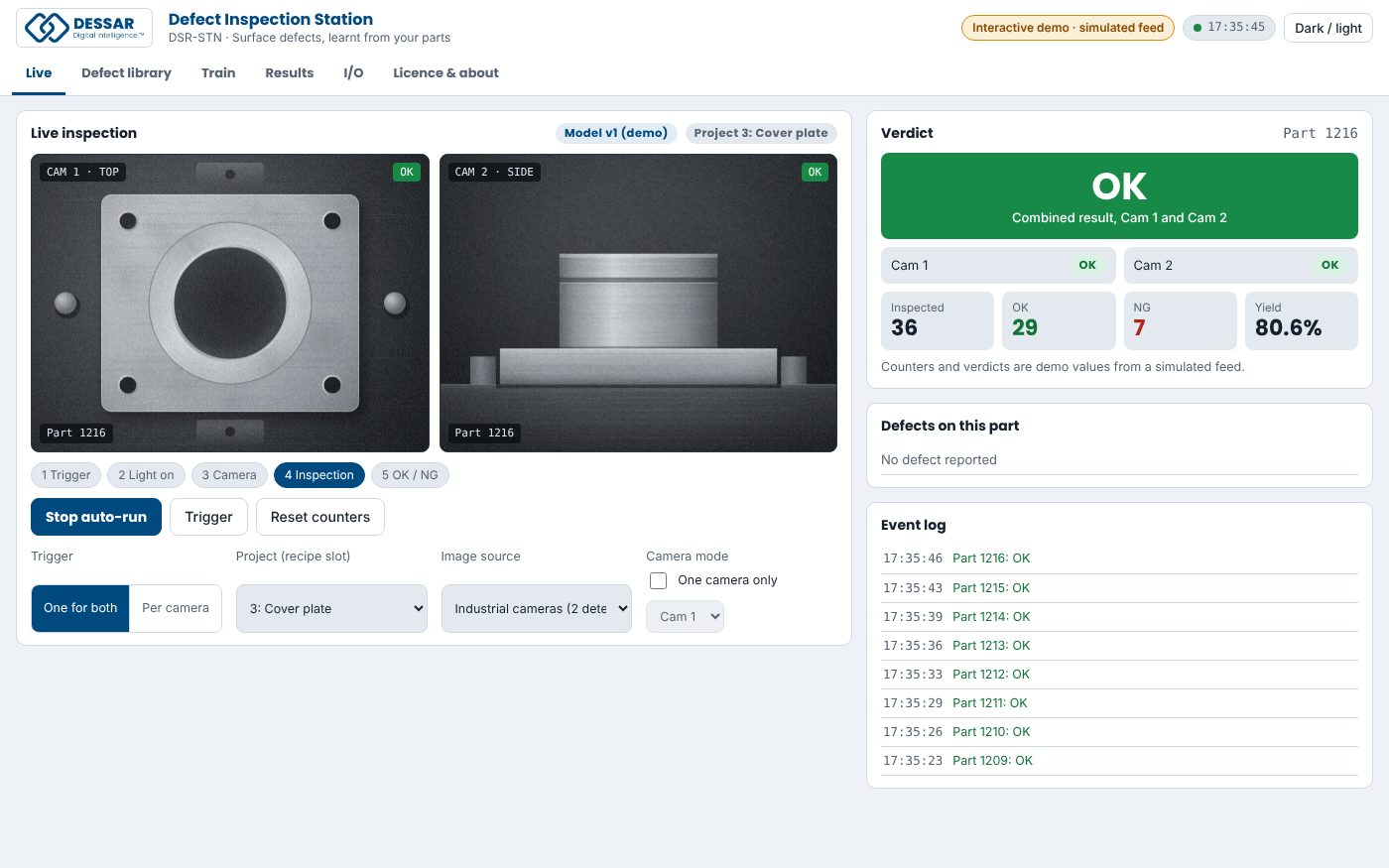
The Defect Inspection Station operator screenDefect Inspection Stationoperator screen
DSR-STN

Defect Inspection Station

Finds surface and cosmetic defects that no fixed rule describes, learnt from your own good and rejected parts.

What we need from you to start

Thirty or more parts covering each defect class, the surface finish, and what rate of false rejects the line can live with. We come back with what is detectable, at what rate, and what it takes. Sensor selection, capability figures and programme detail are issued against your own application.